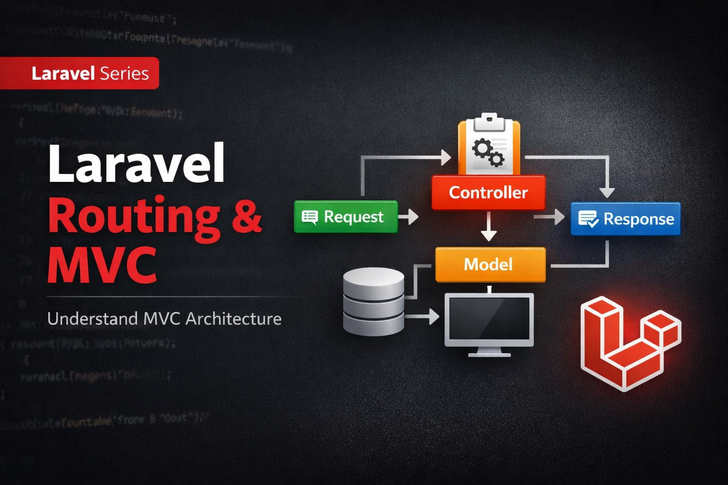
📌 What Are Routes in Laravel?
Routes are the entry points for your web application.
Every HTTP request is mapped to a route, which tells Laravel which code to execute.
Types of Routes:
Web routes → for browser requests
File:routes/web.phpAPI routes → for APIs
File:routes/api.php
🔀 Basic Route Example
Open routes/web.php and add:
Route::get('/', function () {
    return "Welcome to Laravel Routing!";
});
get→ HTTP GET request/→ URL pathfunction()→ callback executed when route is visited
Visit http://127.0.0.1:8000/ → you’ll see the message 🎉
🚪 Route Parameters
Dynamic routes can accept parameters:
Route::get('/user/{id}', function ($id) {
    return "User ID: ".$id;
});
{id}→ route parameter$id→ received in the closure
Example URL: http://127.0.0.1:8000/user/5 → Output: User ID: 5
🏷 Named Routes
Named routes help you generate URLs dynamically:
Route::get('/profile', function () {
    return "This is your profile";
})->name('profile');
Generate URL in Blade:
<a href="{{ route('profile') }}">Profile</a>
🔧 Route Groups & Middleware
Group routes for better organization:
Route::middleware(['auth'])->group(function () {
    Route::get('/dashboard', function () {
        return "Dashboard Page";
    });

    Route::get('/settings', function () {
        return "Settings Page";
    });
});
Only authenticated users can access these routes
middleware → provided by Laravel