

When it comes to smartphones, the biggest debate has always been iOS vs Android. Both operating systems are powerful, polished, and used by billions of people — but they are very different in philosophy, flexibility, and user experience.
If you’re planning to buy a new phone or thinking about switching platforms, this guide will help you understand the real-world differences that actually matter in daily life.
🔹 What Is iOS?
iOS is Apple’s mobile operating system, designed exclusively for iPhone devices. Unlike Android, iOS is a closed ecosystem, tightly controlled by Apple.
Key characteristics of iOS:
- Runs only on Apple hardware
- Deep integration with Apple services
- Strong focus on privacy and security
- Consistent user experience across devices
🔹 What Is Android?
Android is an open-source operating system developed by Google and used by many manufacturers like Samsung, Xiaomi, Oppo, and Google Pixel.
Key characteristics of Android:
- Runs on devices from many brands
- Highly customizable
- Wide range of price options
- Deep integration with Google services
🆚 iOS vs Android: Core Differences
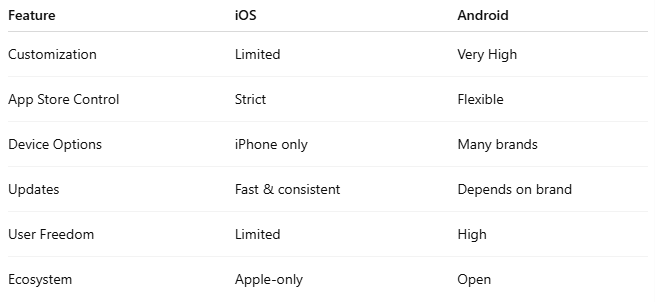
🎨 Customization & User Interface
Android wins clearly here.
- Change launchers
- Customize icons & themes
- Use widgets freely
- Default apps can be replaced
iOS, on the other hand:
- Offers limited customization
- Focuses on simplicity
- Changes are controlled and gradual
👉 If you like full control, Android is better.
👉 If you like simplicity, iOS is ideal.
🔐 Privacy & Security
Apple positions iOS as a privacy-first operating system.
iOS strengths:
- App Tracking Transparency
- Strong app permissions
- Regular security updates
- Strict App Store review
Android strengths:
- Advanced permission control
- Open-source transparency
- Google Play Protect
👉 iOS is better for non-technical users who want strong privacy by default.
👉 Android gives more control, but responsibility is on the user.
📲 Apps & Ecosystem
App Quality
- iOS apps often launch first and feel more polished
- Android has more variety and experimental apps
Ecosystem Integration
- iOS works best with: MacBook, Apple Watch, iPad, AirPods
- Android works with: Windows, Linux, Chromebooks, smart TVs
👉 Apple ecosystem is tight but expensive
👉 Android ecosystem is flexible and affordable
⚙️ Performance & Hardware
- iPhones use Apple-designed chips (A-series)
- Android phones use Snapdragon, Exynos, MediaTek
Real-world performance:
- iPhones feel smooth for many years
- Android performance varies by brand & price
👉 High-end Android phones match iPhone performance
👉 Budget Android phones beat budget iPhones (because there are no budget iPhones)
🔄 Software Updates
iOS:
- Same-day updates for all supported devices
- 5–6 years of updates
Android:
- Google Pixel → fast updates
- Samsung → improving fast
- Other brands → slower
👉 If updates matter most → iOS or Pixel
💰 Price & Value
- iPhones are expensive
- Android phones range from budget to flagship
👉 Students & budget users → Android
👉 Premium experience → iPhone
👨💻 Who Should Choose iOS?
Choose iOS if:
- You already use Apple devices
- You value privacy & security
- You want long software support
- You prefer simplicity
👨🔧 Who Should Choose Android?
Choose Android if:
- You love customization
- You want more phone choices
- You want better value for money
- You like experimenting with technology
🧠 Final Verdict
There is no universal winner.
✔ iOS is best for stability, privacy, and long-term support
✔ Android is best for freedom, customization, and affordability
💡 Choose the OS that fits your lifestyle, not brand loyalty.
❓ Frequently Asked Questions (FAQ)
Is iOS more secure than Android?
By default, yes — but Android can be equally secure with proper settings.
Can Android do things iOS can’t?
Yes, especially customization and file management.
Is Android better for developers?
Android offers more flexibility; iOS offers better monetization.
Which OS lasts longer?
iPhones receive updates longer.