
Introduction
In the fast-moving world of web development, new frameworks appear every year—FastAPI, Bun, Deno, serverless stacks, and AI-powered backends.
So a common question developers ask is:
Is Django still relevant in 2025?
The short answer is YES—and very much so.
Django continues to power secure, scalable, and production-ready web applications used by startups and enterprises worldwide. In this article, we’ll explore why Django still matters, when you should use it, and how it compares to modern alternatives.
What Is Python’s Role in Web Development?
Python is one of the most popular programming languages in the world—and web development is a big reason why.
Why developers love Python:
- Clean, readable syntax
- Massive ecosystem
- Strong community support
- Easy integration with AI, data science, and automation
Python isn’t just for scripts or machine learning—it’s a serious backend language powering real-world applications.
What Is Django?
Django is a high-level Python web framework that encourages:
- Rapid development
- Clean, pragmatic design
- Strong security by default
It follows the MVT (Model–View–Template) architecture and comes with many built-in features that other frameworks require plugins for.
Django’s philosophy: “Batteries Included.”
Why Django Is Still Relevant in 2025
1️⃣ Built for Real Production Systems
Django is not just a framework—it’s a full web platform.
Out of the box, Django provides:
- Authentication system
- Admin panel
- ORM (Database abstraction)
- Security protections (CSRF, XSS, SQL injection)
- Middleware system
This makes Django ideal for long-term, scalable projects.
2️⃣ Security Comes by Default 🔐
In 2025, security is not optional.
Django protects against:
- SQL Injection
- Cross-Site Scripting (XSS)
- Cross-Site Request Forgery (CSRF)
- Clickjacking
Many modern frameworks expect you to handle these manually—Django handles them automatically.
3️⃣ Perfect for Content-Heavy & Business Apps
Django shines when building:
- Blogs & CMS platforms
- Dashboards
- SaaS applications
- Admin panels
- APIs for frontend frameworks
If your app has:
- Users
- Roles & permissions
- Data relationships
- Reports
👉 Django is an excellent choice.
4️⃣ Django + Modern Frontends = Powerful Combo
Django works beautifully with:
- Next.js
- React
- Vue
- Mobile apps
Using Django REST Framework (DRF), you can build APIs while keeping Django as a rock-solid backend.
This is why many teams use:
Frontend → Next.js / React
Backend  → Django + DRF
Database → PostgreSQL
Django vs Flask vs FastAPI (2025 Comparison)
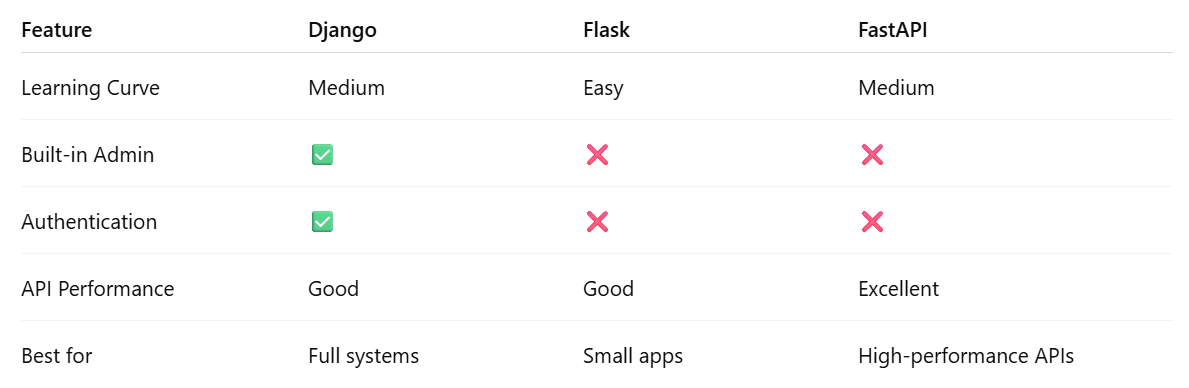
Which should you choose?
- Django → Full-featured web apps
- Flask → Simple or micro apps
- FastAPI → High-performance APIs
Simple Django Example
Here’s how easy it is to start a Django project:
pip install django
django-admin startproject mysite
cd mysite
python manage.py runserver
Now visit:
http://127.0.0.1:8000/
🎉 You already have a working web app.
Who Should Learn Django?
Django is perfect for:
- Python developers entering web development
- Backend developers building APIs
- Freelancers building client projects fast
- Startups needing rapid MVPs
- Developers who care about clean architecture
Real-World Companies Using Django
- Mozilla
- Disqus
- National Geographic
If Django can handle millions of users, it can handle your project too.
Final Thoughts
Despite new frameworks and trends, Django remains one of the most reliable backend frameworks in 2025.
If you want:
- Stability
- Security
- Speed of development
- Clean architecture
👉 Django is still a smart choice.